Cold holds the line between wholesome protein and costly waste. Anyone who has managed a meat program in a grocery chain, a USDA plant, a restaurant group, or a third‑party logistics warehouse learns this quickly. Temperature is nonnegotiable, but temperature alone is not enough. Airflow, humidity control, sanitation routines, packaging integrity, loading practices, and documentation decide whether a shipment survives the journey from harvest to cold storage facility plate. When those variables are dialed in, refrigerated storage becomes a force multiplier: less shrink, smoother audits, and fewer recalls. When any one of them slips, the consequences show up in micro counts, shelf life losses, and insurance claims.
What compliance really means for cold rooms and freezers
For meat and poultry in the United States, “compliance” orbits around USDA Food Safety and Inspection Service (FSIS) regulations, the FDA Food Safety Modernization Act (FSMA) preventive control requirements where applicable, and state or local health codes. Private standards like BRCGS and SQF add their own lenses. The agencies do not run your cooler, but they expect documented control of hazards like pathogen growth and cross‑contamination.
Chilled meat and poultry must be held at 40°F or below, with practical operators targeting 34 to 38°F to blunt fluctuations during door openings and loading. Frozen storage for raw items typically sits between 0 and ‑10°F. For ready‑to‑eat (RTE) products, the expectation is tighter, since Listeria monocytogenes becomes the central concern, not just spoilage. FSIS also cares about time in the danger zone during receiving and transfer. If you are staging a pallet of chicken in an ambient dock for 45 minutes while you clear paperwork, that time needs to be accounted for in your hazard analysis.
Inspectors look for control, not claims. They will ask to see temperature logs, equipment preventive maintenance records, sanitation standard operating procedures (SSOPs), corrective actions, and lot tracking. They are trained to notice condensation on ceiling panels over exposed product, drip from evaporator coils, or over‑stacked pallets blocking airflow. Veteran warehouse managers learn to walk the cooler the same way: looking up first, then outward to the walls and racks.
The physics inside the box: temperature, airflow, humidity
A cooler is not a static block of cold air. Meat carries its own heat load. Each pallet’s mass, packaging type, and arrangement influence how heat and moisture move. Get the physics wrong and you can meet the letter of the temperature setpoint while failing the spirit of safe storage.
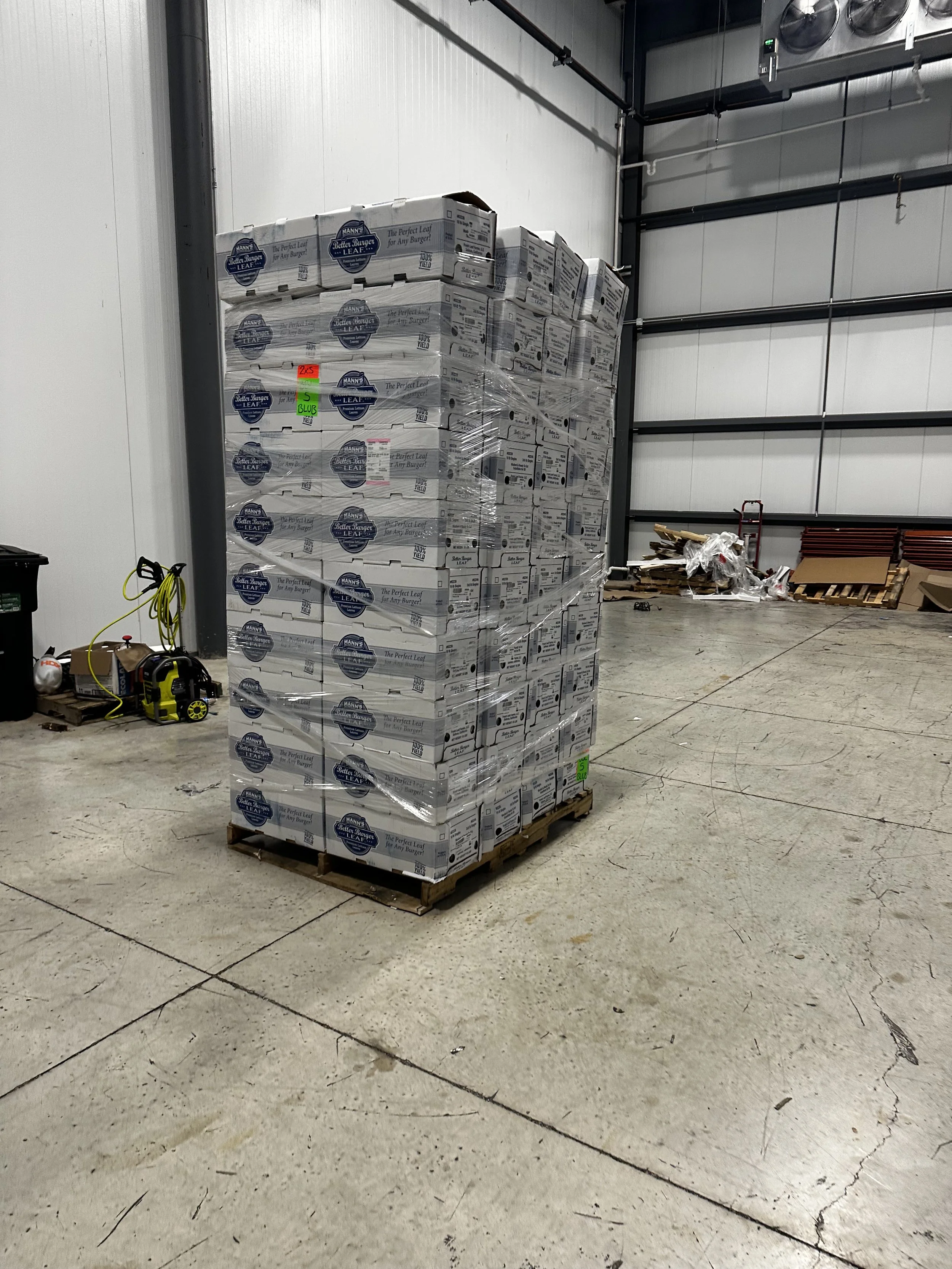
Airflow should move past, not through, boxed meat. That sounds obvious until an overenthusiastic crew stretches wrap around a pallet ten extra passes and creates a vapor barrier. Product in the center stays warmer longer, and if the room cycles defrost at the wrong moment, that warmth lingers. Good practice is to maintain pallet spacing of a few inches from walls and between stacks, to allow cold air to return. Avoid covering vented cases with slip sheets that choke ventilation. In blast chillers or tempering rooms, airflow direction and speed matter even more, since you are trying to move the product temperature, not just hold it.
Humidity is the neglected sibling. Too low, and beef primals lose surface moisture, increasing trim loss and darkening exposed muscle. Too high, and condensation forms on ceilings and boxes, raising the odds of mold, packaging breakdown, and drip back onto product. A relative humidity in the 85 to 90 percent range in wet‑aged beef coolers balances weight loss against condensation risk. Poultry, with its higher surface moisture and different packaging, tolerates slightly different bands, but the principle holds: keep the room from swinging wildly with every defrost cycle. Modern systems modulate fans and use hot gas defrost to reduce wet fog that settles on product.
Raw versus ready‑to‑eat: segregation that actually works
You can comply with signage and still cross‑contaminate if your layout and workflow are sloppy. Raw and RTE storage separation needs more than a line painted on the floor. Dedicated rooms are best when volume justifies it. When that is not feasible, physical barriers, airflow zoning, and process scheduling can protect RTE goods from raw drips, aerosols, and foot traffic.
Personnel flow matters. Tools, forklifts, and pallets that handle raw product should not migrate into RTE aisles without sanitation. Color coding helps when enforced. Drip pans under evaporators are not just maintenance items; they prevent condensate from carrying microbes onto boxed product. If your operation handles spice‑rubbed or marinated items, treat them like raw for zoning purposes unless fully cooked and packaged in a sealed state. Inspectors are rightly skeptical of “temporary” barriers. If you cannot explain your segregation on a simple map and defend it with door switch logs and sanitation changeovers, it will fail under scrutiny.
Packaging: the quiet variable that changes your cold strategy
You can only chill what cold air can reach. Vacuum packaged beef, master‑bagged poultry, and modified atmosphere trays slow surface oxidation and extend shelf life, but they also insulate. A pallet of vacuum‑packed primals in waxed cartons behaves differently from naked primals on racks. The former cools more slowly and creates microclimates inside the stack. Overwrapping then stacks the deck further. Those decisions feed back into receiving protocols and temperature checks. A good receiving team knows that a box reading 36°F on the flap does not guarantee the center is there yet.
Packaging also sets the playbook for humidity and airflow. Permeable films can dehydrate. Nonpermeable films resist moisture loss but sweat in humidity spikes. If you are shifting a line from foam trays to rigid MAP with higher O2 for color, revisit your cold room profile. A slight tweak in humidity can prevent purge pooling and label sloughing. Brand damage often begins with soggy boxes and illegible codes.
Time and temperature integration: beyond a setpoint
The best meat programs treat temperature like a dataset, not a thermostat. Loggers placed inside representative cases, not just on the wall sensor, show the truth. The pattern of door openings reveals whether the pick path causes chronic warm zones. Defrost cycle timing shows up as sawtooth spikes, and you can adjust schedules to off‑peak hours. Alarm thresholds should be set with both duration and delta in mind. A two‑degree drift for five minutes during a busy loading window means something different than a ten‑degree spike at 2 a.m.
Cook‑chill and hot fill operations need validated cool‑down procedures. FSIS guidance for cooling cooked meats requires dropping from 130°F to 80°F within 1.5 hours and 80°F to 40°F within five hours, or equivalent. Meeting that in summer requires ice baths, blast chillers, or chilled brine systems, not wishful thinking in a standard walk‑in. Tie your production plan to chill capacity. More than one plant learned the hard way that pushing an extra batch through a cooker does not change the physics downstream.
Sanitation that supports rather than sabotages cold
Cold rooms gather dirt slowly and then all at once. Condensers pull dust and fat aerosols into fins. Door gaskets trap organic matter. Floor drains harbor biofilms. If you wait for visible grime, you are late. SSOPs for refrigerated storage should define frequency for ceiling panel wipe‑downs, evaporator drip pan cleaning, gasket replacement, and drain foaming. Sanitizer selection matters in cold environments. Quats can lose efficacy at low temperatures and in hard water. Peracetic acid can perform better in the cold but corrodes softer metals and stings if ventilation is poor.
Water is both friend and foe. Foam cleaning with generous rinsing in a cooler creates fog, then ice. Ice creates slip hazards and harbors microbes beneath. Dry pickup methods, targeted low‑moisture foams, and spot rinsing save time and product. Schedule wet work when product is sealed or removed. If operations demand sanitation around exposed product in a chilled room, risk assessment must cover overspray and aerosolization, with physical covers and dedicated crews to manage it.
The receiving dock: where most problems start
Ask any plant manager where they catch the worst temperature abuse, and the answer usually lands on the dock. Trailers arrive with broken seals, long waits, or poorly maintained reefer units. Drivers eager to be helpful open the doors before backing in, spilling cold air and pulling in humid air that condenses inside. Once the truck is on the dock, two clocks start: the regulatory one and the biological one.
Make pre‑cooling part of your SOP, not a suggestion. If the dock or staging room sits at ambient, your door seals are not magic. Turn the staging room into an anteroom set at 45°F or below. Insist on pulp temps at receiving, not just reading the air in the trailer. A needle probe through a tape‑sealed hole in a sample case gives a more honest number than a laser pointed at cardboard. Record those readings with lot numbers, and push back on carriers if the load misses spec. Carriers take a facility seriously when rejections are consistent and documented.
Lot coding and traceability: your safety net during recalls
Traceability is dull until the day you need it. Meat and poultry move through complex networks: packer to consolidator, to cold storage, to further processors or retail DCs, then out to stores. When a supplier issues a recall, your speed depends on the clarity of your lot mapping and your confidence in inventory locations.
Manual logs and paper stickers can technically pass audits, but they slow crisis response. Scanning at receiving, movement, and shipping trims hours off the hunt. If you store raw and RTE in the same campus, your traceability must show the zoning trail. A common failure in investigations is a forked lot where a pallet was broken and partial cases were moved across zones without a transaction. That is where a facility with disciplined scanning and location control, whether a large 3PL or a regional cold storage facility, proves its worth.
Shelf life management: microbiology meets operations
Shelf life is not a fixed number printed in a spec. It is a negotiation between microbial growth, oxidation, packaging, and real‑world handling. Beef primals can carry 35 to 60 days under vacuum at 32 to 34°F. Poultry, even in high‑quality packaging, lives on a shorter timeline because of its native flora and moisture. Each day you lose to warm episodes or shipping delays steals a day at retail.
If you manage a network, separate inventory into risk bands according to arrival age and handling history. A truck that rode across the desert in August and delivered at 39°F is not the same as one that arrived at 33°F. Use that difference to prioritize allocation. Retailers who ship their oldest meat to the farthest stores create their own spoilage. A simple rule that the farthest lane gets the freshest lots fixes that without software magic.
Energy, equipment health, and the business case
Cold storage is energy intensive, so managers often feel the pressure to nudge setpoints upward. There is money on the table if you optimize. Electronically commutated motors, demand‑defrosting, variable frequency drives, door curtains, and fast‑acting doors all trim consumption. The trick is to implement savings without compromising food safety.
One example: facilities that switch to door proximity sensors tied to evaporator fans cut fan run time when doors stand open. That saves energy, but in a poultry cooler with high humidity, it can invite condensation plumes that later rain on pallets. A better configuration is to reduce speed rather than shut off entirely, keeping air moving enough to discourage fog. Equipment maintenance also underpins safety and savings. Dirty condensers run hot, shortening compressor life and raising energy draw. Ice on evaporators insulates fins, reducing cooling capacity and making temperature control erratic. Quarterly deep preventive maintenance paired with weekly visual checks catches those issues early.
Working with a third‑party cold storage facility
Many producers and distributors outsource storage to a 3PL cold warehouse, sometimes close to production, sometimes strategically near markets. The core compliance duties do not disappear when you hand off product. They shift into a relationship that needs clarity.
A competent cold storage partner shares live temperature graphs, not just daily summaries. They welcome unannounced visits, provide SSOPs on request, and align on allergen and zoning requirements before the first pallet lands. If you market in central or south Texas, a cold storage facility in San Antonio TX can position inventory within a day’s drive of most of the state. Location is not the only criterion. Look for design that separates raw meat, RTE items, and dry ingredients. Ask about generator coverage, fuel contracts for extended outages, and how often they test transfer switches. Request their last third‑party audit score. The better facilities do not hide it.
There is a human factor too. You want a warehouse where the night lead knows the difference between bone‑in beef and split chicken when they read a bill of lading. A cold storage facility with high turnover at the dock eats more mistakes than one with tenured receivers. If you are searching for a refrigerated storage partner and find yourself typing refrigerated storage near me or cold storage facility near me, remember that proximity helps only if the operation behind the door is disciplined. Proximity cannot fix temperature abuse or sloppy inventory control.
For organizations with regional needs, especially in Texas corridors from Austin to Laredo, a cold storage San Antonio TX footprint can shorten lead times and reduce the hot‑weather risk of long hauls. The same logic applies if your volumes swing seasonally. A partner with flexible racking, convertible rooms, and experience handling both fresh and frozen meat helps you right‑size without building your own box.
Common failure modes and how to avoid them
After years of warehouse walk‑throughs and post‑incident reviews, the same patterns reappear. They are preventable with simple habits.
- Relying on wall thermometers alone. Place loggers inside cases, in middle pallets, and rotate them. Compare readings during peak activity and overnight. Overwrapping pallets until they cannot breathe. Train crews to stop at functional stability, not aesthetics. Letting drains turn into science projects. Schedule foaming and mechanical cleaning. Biofilms resist casual splash‑and‑dash. Trailer doors opened on the lot. Require sealed docks and door opening after staging. Make it policy and enforce it. Mixed‑use tools crossing zones. Color code, label, and audit. Tools migrate unless someone owns the barrier.
Receiving and loading: a tight routine that respects the clock
The speed of a dock team determines whether your cold program is proactive or reactive. Get the choreography right and temperature stays stable even during busy windows. Train for this long before peak season.
- Pre‑cool the dock or staging room and verify trailer setpoints before opening. Check and record pulp temperatures from representative cases at the beginning, middle, and end of the load. Stage by destination and temperature requirement, not by who arrived first, to reduce door open time and mis‑loads. Seal and label pallets clearly, with lot and date visible on two sides. Move product into final storage immediately; do not park in ambient aisles “for a minute.”
Tempering, blast chilling, and special cases
Not every movement is from cold to colder. Tempering frozen meat for further processing or retail cutting requires control as tight as chilling. Safe tempering usually aims for 28 to 30°F, where meat is firm but cuttable. The safest approach uses dedicated tempering rooms with slow, even airflow and tight temperature limits. Avoid ambient tempering rooms or open floor practices, which create sweat and invite pathogen growth. Place temperature probes in the thickest pieces to confirm internal targets, not just surface readings.
Blast chilling is another special case. If you cook, then chill, you need the capacity to pull heat fast. The math involves product mass, target temperature drops, and the room’s heat extraction rate. Facilities that rely on a standard cooler to chill cooked product court noncompliance. Investment in blast chilling pays back in shelf life and audit calm, especially with RTE meats where Listeria control is central.
The role of people: training and culture
Refrigerated storage succeeds when the people touching the product own the why. Post a setpoint and people will work around it. Explain that 36°F on a raw poultry pallet reduces Salmonella growth relative to 40°F over a shift, and you invite cooperation. Rotate staff through short microbiology refreshers. When a receiver rejects a load for temperature, back them up publicly. That story spreads faster and trains better than an SOP alone.
Supervisors set tone with simple habits. Daily walks at the warmest hour show whether door curtains hang straight, evaporators drip, or ice forms on thresholds. Weekly checks of data logger placement catch units that got buried behind pallets. A good culture treats a missed log as a signal to fix a system, not to scold an individual. Fix the pencil‑whip pressure by making the logs useful. If the data helps allocate labor or assign doors, teams see value and comply.
Documentation that helps operations rather than piles up
Paperwork does not have to burden the floor. Choose forms and dashboards that operators use to make decisions. A receiving temperature sheet that highlights out‑of‑spec in red with a space for immediate disposition beats a form that disappears into a binder. Digital systems help when they are simple and resilient in cold. Tablets with gloved‑hand interfaces and offline caching handle the reality of a busy dock better than complex handhelds that crash when the Wi‑Fi hiccups.
For compliance, keep the backbone: SSOPs, HACCP plans where applicable, preventive maintenance logs, pest control logs, temperature logs, corrective actions, and traceability reports. When auditors come, let your operators talk. A line worker who can describe why the door alarm matters carries more weight than a binder does. That confidence grows from training and from using the system daily.
Choosing a facility and designing for growth
If you are building or selecting a cold storage facility, think beyond cubic feet. Look at door counts and positions relative to traffic. A room with great refrigeration that forces forklifts to crisscross raw and RTE aisles bakes in risk. Inspect floor conditions. Uneven floors create pooling that becomes ice, then rutting, then damaged racks. Ask to see winter and summer electric bills to understand peak loads. If you anticipate expansion, design for convertible rooms that shift between refrigerated storage and frozen storage without major reconstruction. That flexibility cushions seasonal swings and product mix changes.
For companies anchoring in Texas, the distribution calculus places San Antonio within efficient reach of border traffic, oil field routes, and major retail hubs. A cold storage facility San Antonio TX option often reduces miles and fuel, especially during peak heat months when long runs sap reefer performance. Still, do not let location blind you to operational rigor. A smaller, well‑run refrigerated storage San Antonio TX warehouse can outperform a larger, poorly managed box farther north.
Practical metrics to run the program
Four numbers can anchor your refrigerated storage performance:
- Temperature compliance rate by location and time window, not just daily averages. Dock dwell time per load, with thresholds by product type. Shrink by SKU and storage duration, tied to temperature history. Preventive maintenance on‑time completion rate for refrigeration assets.
Those metrics spotlight where to put effort. If dwell spikes on Thursdays, stagger receiving appointments. If shrink creeps for certain SKUs, investigate packaging and humidity on their racks. If PM slips, expect more defrost surprises and budget hits.
The quiet payoff: fewer surprises, better product
Run refrigerated storage with discipline and the benefits pile up. Meat blooms consistently at retail. Poultry drip loss stays low. QA spends less time firefighting. Your team rejects fewer loads because carriers learn your standards. Insurance adjusters visit less often. Most importantly, you sleep better when a storm knocks out power because you picked a facility with generator coverage and you know exactly how long your rooms hold temp.
If you are searching for a partner rather than building your own, ask hard questions and look past the brochure. Whether you are exploring a cold storage facility near me to trim lane miles or considering a larger cold storage network with nodes like a cold storage facility in San Antonio TX, evaluate on proof: temperature data, audit history, response during past outages, and the steadiness of the people at the helm. Refrigerated storage is a craft. The right facility, the right habits, and the right data keep meat and poultry safe from the day they arrive to the hour they ship.
Business Name: Auge Co. Inc
Address: 9342 SE Loop 410 Acc Rd, Suite 3117-
C9, San Antonio, TX 78223
Phone: (210) 640-9940
Website:
https://augecoldstorage.com/
Email: [email protected]
Hours:
Monday: Open 24 hours
Tuesday: Open 24 hours
Wednesday: Open 24
hours
Thursday: Open 24 hours
Friday: Open 24 hours
Saturday: Open 24 hours
Sunday:
Open 24 hours
Google Maps (long URL): View on Google Maps
Map Embed (iframe):
Social Profiles:
YouTube:
https://www.youtube.com/channel/UCuYxzzyL1gBXzAjV6nwepuw/about
Auge Co. Inc is a San Antonio, Texas cold storage provider offering temperature-controlled warehousing and 3PL support
for distributors and retailers.
Auge Co. Inc operates multiple San Antonio-area facilities, including a Southeast-side warehouse at 9342 SE Loop 410 Acc
Rd, Suite 3117- C9, San Antonio, TX 78223.
Auge Co. Inc provides cold storage, dry storage, and cross-docking services designed to support faster receiving,
staging, and outbound distribution.
Auge Co. Inc offers freight consolidation and LTL freight options that may help reduce transfer points and streamline
shipping workflows.
Auge Co. Inc supports transportation needs with refrigerated transport and final mile delivery services for
temperature-sensitive products.
Auge Co. Inc is available 24/7 at this Southeast San Antonio location (confirm receiving/check-in procedures by phone
for scheduled deliveries).
Auge Co. Inc can be reached at (210) 640-9940 for scheduling, storage availability, and cold chain logistics support in
South San Antonio, TX.
Auge Co. Inc is listed on Google Maps for this location here: https://www.google.com/maps/search/?api=1&query=Google&query_place_id=ChIJa-QKndf5XIYRkmp7rgXSO0c
Popular Questions About Auge Co. Inc
What does Auge Co. Inc do?
Auge Co. Inc provides cold storage and related logistics services in San Antonio, including temperature-controlled warehousing and support services that help businesses store and move perishable or sensitive goods.
Where is the Auge Co. Inc Southeast San Antonio cold storage location?
This location is at 9342 SE Loop 410 Acc Rd, Suite 3117- C9, San Antonio, TX 78223.
Is this location open 24/7?
Yes—this Southeast San Antonio location is listed as open 24/7. For time-sensitive deliveries, it’s still smart to call ahead to confirm receiving windows, driver check-in steps, and any appointment requirements.
What services are commonly available at this facility?
Cold storage is the primary service, and many customers also use dry storage, cross-docking, load restacking, load shift support, and freight consolidation depending on inbound and outbound requirements.
Do they provide transportation in addition to warehousing?
Auge Co. Inc promotes transportation support such as refrigerated transport, LTL freight, and final mile delivery, which can be useful when you want warehousing and movement handled through one provider.
How does pricing usually work for cold storage?
Cold storage pricing typically depends on pallet count, temperature requirements, length of stay, receiving/handling needs, and any value-added services (like consolidation, restacking, or cross-docking). Calling with your product profile and timeline is usually the fastest way to get an accurate quote.
What kinds of businesses use a cold storage 3PL in South San Antonio?
Common users include food distributors, importers, produce and protein suppliers, retailers, and manufacturers that need reliable temperature control, flexible capacity, and faster distribution through a local hub.
How do I contact Auge Co. Inc for cold storage in South San Antonio?
Call (210) 640-9940 to discuss availability, receiving, and scheduling. You can also
email [email protected]. Website: https://augecoldstorage.com/
YouTube: https://www.youtube.com/channel/UCuYxzzyL1gBXzAjV6nwepuw/about
Google Maps: https://www.google.com/maps/search/?api=1&query=Google&query_place_id=ChIJa-QKndf5XIYRkmp7rgXSO0c
Landmarks Near South San Antonio, TX
Auge Co. Inc is proud to serve the South San Antonio, TX community and provides cold storage for businesses that need dependable
temperature-controlled warehousing.
If you’re looking for cold storage in South San Antonio, TX, visit Auge Co. Inc near Brooks City Base.
Auge Co. Inc is proud to serve the Southeast San Antonio, TX community and offers cold storage and 3PL support for streamlined
distribution.
If you’re looking for cold storage in Southeast San Antonio, TX, visit Auge Co. Inc near Toyota Motor Manufacturing Texas.
Auge Co. Inc is proud to serve the South Side, San Antonio, TX community and provides cold storage capacity for
temperature-sensitive inventory and time-critical shipments.
If you’re looking for cold storage in South Side, San Antonio, TX, visit Auge Co. Inc near Stinson Municipal Airport.
Auge Co. Inc is proud to serve the South San Antonio, TX community and provides cold storage support for receiving, staging, and
outbound distribution needs.
If you’re looking for cold storage in South San Antonio, TX, visit Auge Co. Inc near South Park Mall.
Auge Co. Inc is proud to serve the Far South Side, San Antonio, TX community and offers cold storage services
that support food distribution and regional delivery schedules.
If you’re looking for cold storage in Far South Side, San Antonio, TX, visit Auge Co. Inc near Palo Alto College.
Auge Co. Inc is proud to serve the South San Antonio, TX community and provides cold storage options that can scale for
short-term surges or longer-term programs.
If you’re looking for cold storage in South San Antonio, TX, visit Auge Co. Inc near Mitchell Lake Audubon Center.
Auge Co. Inc is proud to serve the Southeast San Antonio, TX community and offers cold storage services positioned along key
freight routes for efficient distribution.
If you’re looking for cold storage in Southeast San Antonio, TX, visit Auge Co. Inc near Frost Bank Center.
Auge Co. Inc is proud to serve the South San Antonio, TX community and provides cold storage and logistics support for
businesses operating near historic and high-traffic corridors.
If you’re looking for cold storage in South San Antonio, TX, visit Auge Co. Inc near San Antonio Missions National Historical Park.
Auge Co. Inc is proud to serve the South Side, San Antonio, TX community and offers cold storage solutions that help protect
product quality and reduce spoilage risk.
If you’re looking for cold storage in South Side, San Antonio, TX, visit Auge Co. Inc near Mission San José.